Meet John. John is a Goodreads user who wants better book recommendations than he is currently receiving. He particularly enjoys books with lots of action and monsters, but he prefers his monsters to be bad guys, and he’s sick of getting recommendations for paranormal romances. He decides to use the (mini)Book Genome Project (mBG) to find more books to read.
John logs into his Goodreads account on the mBG website. mBG fetches a list of his shelves via the Goodreads API, and John selects the shelf he made the last time he was on Goodreads, entitled, “Monsters Not Lovers.”
Based on John’s shelf, mBG finds a book that it thinks might be what John is looking for, showing him the book cover, synopsis, and a few other bits of information about the book. The 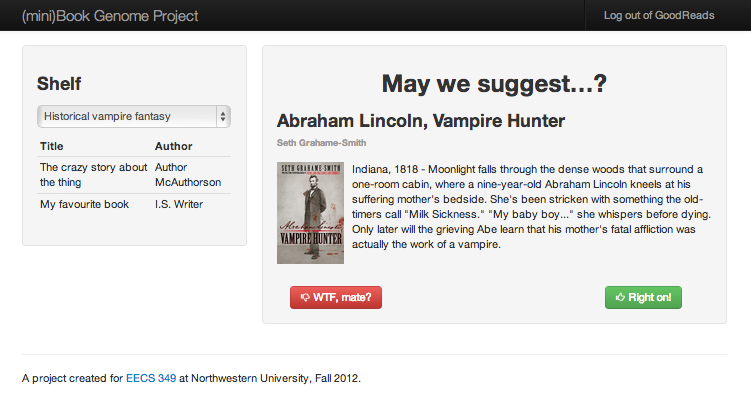 first book it shows him is Twilight, and he gives it a thumbs down. mBG incorporates that feedback into its knowledge of this shelf, and finds another book to recommend. This time, it recommends Monster Hunter International. John hasn’t read it, or heard of it, and he isn’t sure based on the synopsis whether or not it fits in, so he passes. mBG notes that this book has a neutral classification, and then finds another book to recommend: World War Z. John hasn’t read it either, but it’s clear that it fits the bill. He gives it a thumbs up.